- Thriving Guide
- Posts
- Are sweet potatoes healthier than white potatoes?
Are sweet potatoes healthier than white potatoes?
How the two spuds differ as plants, how much the world grows, and an easy topping swap from Cleveland Clinic.
Both are good choices, and the gap between them is small. Cleveland Clinic says the main edge for sweet potatoes is vitamin A, which white potatoes do not have.
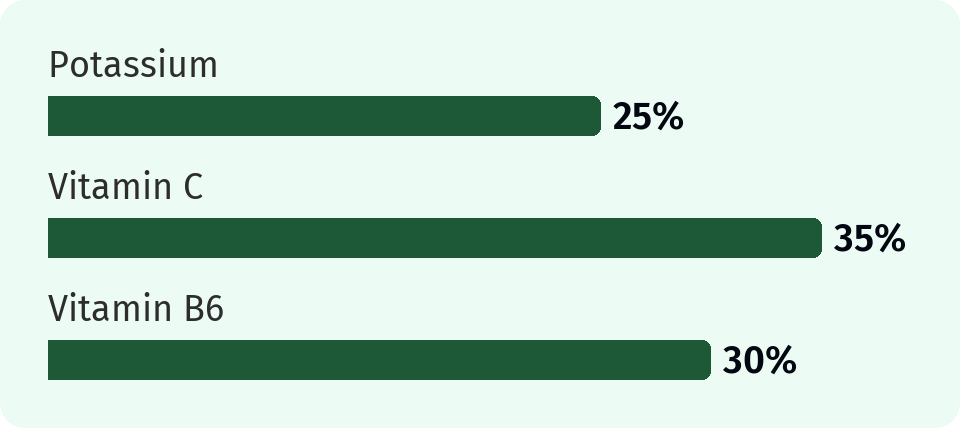
Cleveland Clinic calls potatoes and sweet potatoes healthy, nutritious foods. Both are lower-calorie, low-fat foods that are rich in fiber, potassium, vitamin B6 and vitamin C. Either one contains more potassium than a banana, the clinic notes, and a medium potato or sweet potato supplies about 30% of your daily value of vitamin B6. One medium baked russet potato with the skin on offers 25% of daily potassium and 35% of daily vitamin C.
The clear difference is vitamin A. Sweet potatoes get their orange flesh from beta carotene, an antioxidant that the body converts into vitamin A. White potatoes contain none. One of the clinic's dietitians says that is "the main reason why sweet potatoes come across as a little bit of a better option" if you have to pick one. She adds that it comes down to personal preference, and her advice is to use both for variety.
Keep the skin on either one. Cleveland Clinic says half of the fiber in a potato or a sweet potato is in the skin, along with many of its other nutrients. Wash it well to remove any dirt, then leave it on.
How you cook them matters more than which one you pick. The clinic says any potato soaked in butter, deep fried or topped with sour cream packs on calories, and it points to the French fries and potato chips in many diets as the bigger concern. Baking causes the least loss of nutrients. For portions, it cites the Dietary Guidelines for Americans, which include up to 5 cups a week of starchy vegetables for people needing 2,000 calories a day.
Despite the shared name, the two are not close family. Cleveland Clinic says potatoes belong to the nightshade family, while sweet potatoes belong to the morning glory family, and the two count as distantly related at best. Both are root vegetables, which means the part you eat grows under the soil. Regular potatoes have white or yellow flesh, while sweet potatoes are known for their orange insides, and both usually have brownish skin that can vary by variety.
There is a lot of variety to choose from. The clinic says more than 4,000 types of potatoes and 1,000 varieties of sweet potatoes are grown around the globe, and each type of potato varies only slightly in vitamins and minerals. Both crops rank among the world's most-produced, and the clinic calls them essential for global food security. Farmers harvested more than 370 million metric tons of potatoes in 2019, and the sweet potato harvest reached almost 92 million metric tons that year. The clinic notes the average American eats about 55 pounds of potatoes a year.
Potatoes and sweet potatoes both land in the starchy vegetable group because of their carbohydrate content, which the clinic says usually means more calories than non-starchy vegetables. That does not make them off limits. Cleveland Clinic says healthy eating should include a variety of starchy and non-starchy vegetables, and it suggests a simple swap for toppings: a drizzle of olive oil with chives instead of sour cream, butter and salt. Its dietitians also say to skip the fries and leave room on the plate for plenty of other fruits and vegetables.
Talk to your doctor if you have been told to limit potassium or carbohydrates.