- Thriving Guide
- Posts
- How to Do Bench Dips Correctly
How to Do Bench Dips Correctly
This simple bodyweight exercise targets your triceps and upper body and can be done just about anywhere.

Audrey Sawyer
January 06, 2026
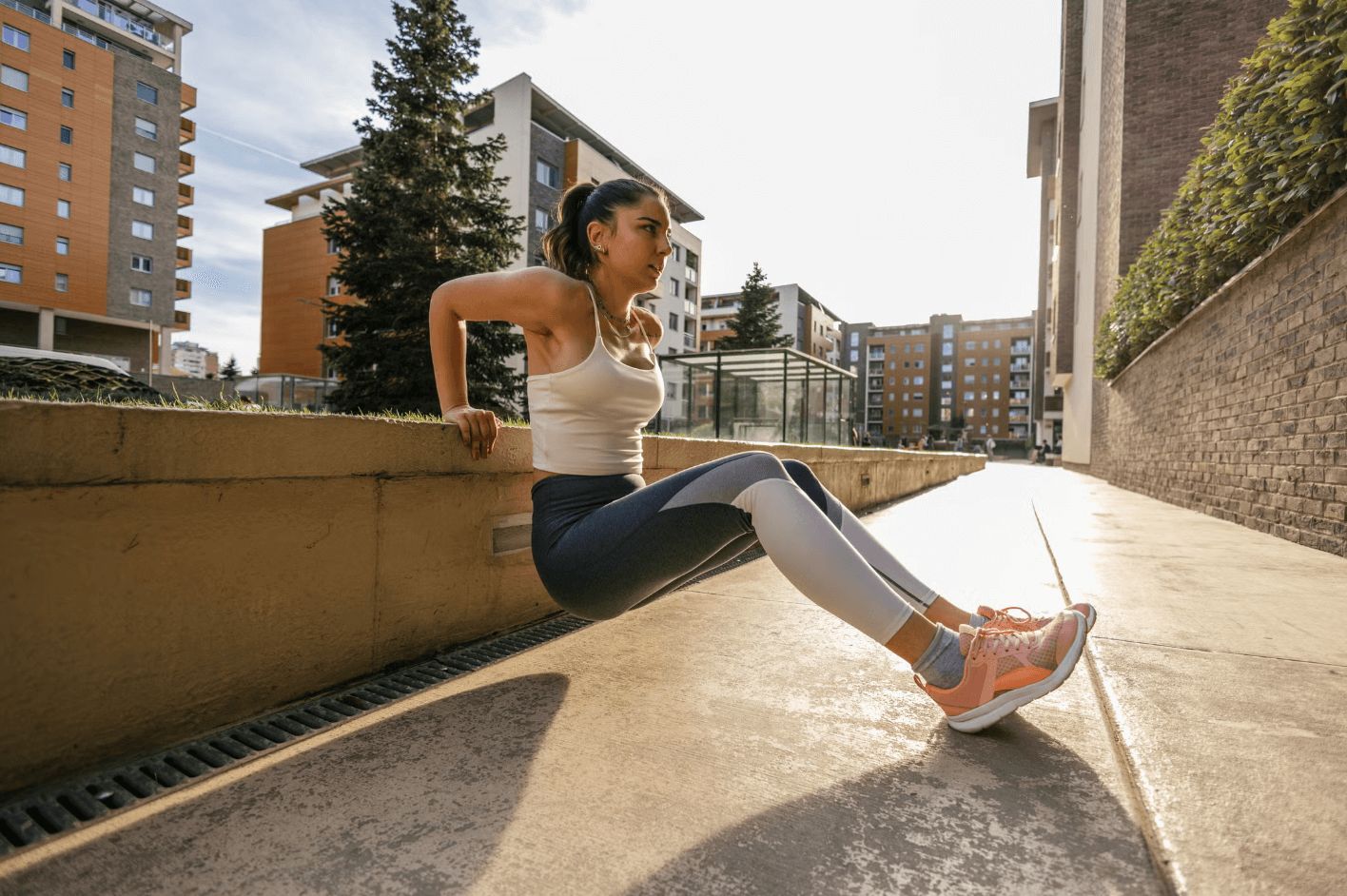
If you're looking to build stronger arms and upper body strength without expensive equipment, bench dips are a tried-and-true move worth mastering. This bodyweight exercise uses a bench, chair, or sturdy surface to help you target the triceps, while also recruiting your shoulders, chest, and back muscles for stability and control.
Whether you're working out at the gym or at home, here's everything you need to know about how to do bench dips properly and the muscles they work.
How to Perform Bench Dips Safely
Bench dips may look simple, but form matters to prevent shoulder strain and get the most benefit. Follow these steps to perform the movement correctly:
Set up: Sit on the edge of a bench or sturdy chair. Place your hands next to your hips, fingers pointing forward.
Position your legs: Slide your hips off the edge and bend your knees at a 90-degree angle, feet flat on the floor.
Lower your body: Bend your elbows slowly and lower your body until your upper arms are parallel to the ground (about a 90-degree bend at the elbow).
Push back up: Straighten your arms to return to the starting position. Avoid locking your elbows.
Tips for Good Form:
Keep your shoulders down and back don’t shrug.
Maintain a straight spine and engage your core.
Avoid flaring your elbows out to the sides.
Muscles Worked by Bench Dips
The primary muscle targeted by bench dips is the triceps brachii, which runs along the back of your upper arm and is responsible for elbow extension. But it’s not the only muscle being worked.
According to electromyography (EMG) research, bench dips also activate:
Anterior deltoid (front of shoulder)
Lower trapezius (mid-back)
Latissimus dorsi (side and back muscles)
These muscles help stabilize the shoulder joint and support good posture, making bench dips a functional upper-body move.
Benefits of Bench Dips
Effective for building arm strength
Helps develop shoulder and upper back stability
Requires minimal equipment great for home workouts
Easily modified for beginners or advanced fitness levels
Where You Can Do Bench Dips
At Home:
No gym? No problem. Use a sturdy chair, ottoman, or low countertop instead of a weight bench. Ensure it’s stable and won’t slide as you move.
At the Gym:
Weight benches are usually easy to access, and you can increase the challenge by placing a weight plate on your lap as you perform the exercise.
Bench Dip Alternatives and Variations
Want to change things up or make the move harder? Try these popular dip variations:
1. Chair Dips
Perfect for home workouts, chair dips offer the same form and benefits as bench dips. Just make sure the chair doesn’t tip or move.
2. Ring Dips
Performed on gymnastics rings, these require greater balance and recruit more muscles, including the pectoralis major, serratus anterior, and biceps. Ideal for more advanced users.
3. Bar Dips
Using parallel dip bars or a dip station, this variation increases resistance and engages the rotator cuff (infraspinatus) in addition to the triceps and chest.
4. Bench Dips vs. Push-Ups
Both work the triceps, but push-ups emphasize the chest (pectoralis major) more. Including both in your routine helps develop balanced upper-body strength.
Who Should Avoid Bench Dips?
While bench dips are effective, they may not be safe for everyone. You should avoid them if you:
Have shoulder pain, impingement, or arthritis
Lack adequate shoulder mobility
Experience discomfort during the movement
Safer Modifications:
Perform shallower dips to limit range of motion
Use an assisted dip machine with counterweight support
Substitute with triceps pushdowns, push-ups, or skull crushers
If you're unsure whether this move is right for you, speak with a healthcare or fitness professional before adding it to your routine.
Final Thoughts
Bench dips are a versatile upper-body exercise that require little space and minimal equipment. With proper form, they can help you build triceps strength, improve shoulder stability, and boost overall upper-body definition.
Share this article or subscribe to our newsletter for more fitness tips you can actually use.