- Thriving Guide
- Posts
- Bicep Tendonitis Exercises That Help You Heal
Bicep Tendonitis Exercises That Help You Heal
Targeted movement, stretching, and therapy can ease pain and restore function but knowing which exercises to avoid is just as important.

Audrey Sawyer
January 26, 2026
Nagging pain in your upper arm or shoulder could be more than just a pulled muscle it might be biceps tendonitis, a condition that can make even the simplest tasks like lifting a bag or brushing your hair painful. Often caused by overuse, repetitive motion, or age-related wear and tear, biceps tendonitis affects the tendon that connects the biceps muscle to the shoulder.
The good news? With the right physical therapy exercises and proper care, you can ease inflammation, regain strength, and improve mobility. Here's what to know and the specific moves that can help you heal safely.
What Is Biceps Tendonitis?
The biceps tendon attaches your upper arm muscle to your shoulder. When irritated or overworked common in repetitive overhead activities like tennis or swimming it can become inflamed, leading to biceps tendonitis. This inflammation can also develop as a result of rotator cuff injuries or natural age-related changes in your shoulder.
Symptoms include:
Pain or aching in the upper arm and shoulder
Difficulty lifting or reaching
A snapping sensation or sound in the shoulder
Because symptoms can mimic other shoulder conditions (like rotator cuff tears or arthritis), getting a proper diagnosis is crucial. A healthcare provider may recommend physical therapy as a first-line treatment.
How Physical Therapy Can Help
Physical therapy for biceps tendonitis focuses on:
Reducing pain and inflammation
Improving shoulder and arm mobility
Strengthening surrounding muscles to support healing
Restoring functional movement for daily activities
Exercises will vary depending on your stage of healing, but many target shoulder range of motion, arm strength, and tendon flexibility. Below are some of the most common exercises physical therapists recommend.
8 Exercises for Biceps Tendonitis Recovery
Before starting any new exercise regimen, always consult with your healthcare provider or physical therapist. The following movements are commonly used in rehab plans and can be done at home with minimal equipment:
1. Biceps Stretch This helps relieve tension in the front of the arm and shoulder.
Stand tall, arms behind your back with palms down
Interlace your fingers and gently lift your arms upward
Hold for up to 60 seconds and repeat 2–3 times
2. Shoulder Flexion Restores vertical range of motion.
Raise your affected arm straight in front of you, palm up
Lift as high as comfortable, hold for 5 seconds
Lower slowly and repeat 10 times
3. Elbow Flexion Encourages gentle movement in the biceps.
Bend your elbow, bringing your palm toward your shoulder
Use your opposite hand to assist if needed
Slowly return to start and repeat
4. Shoulder Internal Rotation Improves rotation and joint function.
Lie on your back with knees bent
Hold a light weight in the affected hand, elbow bent at 90 degrees and tucked to your side
Slowly rotate your hand away from your body and return
5. Shoulder External Rotation Promotes flexibility and stability.
Stand in a doorway with your elbow bent at 90 degrees
Hold the doorframe and gently rotate your body away
Hold the stretch for 5 seconds, then release
6. Forearm Twists Increases forearm and elbow flexibility.
Bend your elbows at 90 degrees
Rotate palms up, hold 5 seconds, then palms down, hold 5 seconds
Repeat 10 times
7. Shoulder Circle Crossover Enhances full shoulder mobility.
Raise your arms to the sides and move them backward slightly
Bring them forward and cross in front of your chest
Repeat 3–6 times, completing 1–2 sets
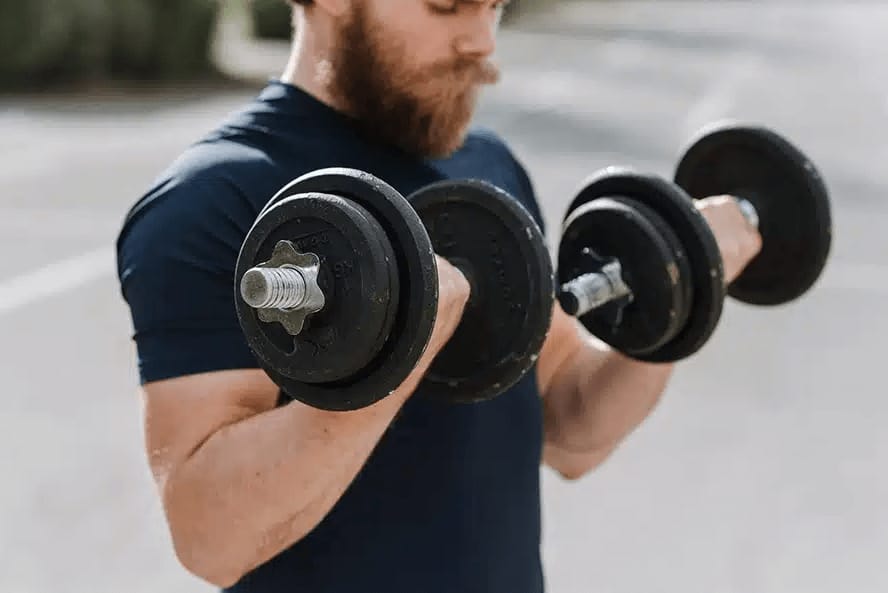
8. Bicep Curls (Advanced Phase) Use with caution and only during later stages of recovery.
With light weights, bend elbows to bring the weights toward your shoulders
Maintain control and proper form avoid swinging
Stop if pain occurs
What to Avoid While Healing
Avoid overhead lifting, heavy pushing or pulling, and fast, repetitive motions. These can aggravate inflammation and delay recovery. Instead, focus on slow, controlled movements and rest when needed.
Additional Therapies to Support Recovery
In conjunction with exercise, physical therapists may use several tools to aid healing:
Massage therapy, including cross-friction massage to boost circulation
Kinesiology taping to improve joint alignment (though evidence is mixed)
Heat and ice therapy to manage inflammation and promote comfort
Ultrasound or electrical stimulation (e-stim) to enhance blood flow or muscle engagement
Dry needling and iontophoresis (a medicated electrical treatment), though both require more research for effectiveness
How Long Does Recovery Take?
Most people see improvement within 4 to 6 weeks of consistent therapy. More severe cases may take longer. If your symptoms don’t improve with PT, your provider may explore advanced options like cortisone injections, PRP therapy, or surgery.
Can You Prevent Biceps Tendonitis from Returning?
Once healed, it’s important to continue shoulder and arm strengthening exercises, avoid overuse, and maintain good posture especially during physical activity. Staying active while listening to your body can prevent future flare-ups.
Share this article or subscribe to our newsletter for more expert-backed tips on active living and pain relief.