- Thriving Guide
- Posts
- Do You Need to Avoid Nuts and Popcorn With Diverticulosis?
Do You Need to Avoid Nuts and Popcorn With Diverticulosis?
The NIDDK's general fiber target and more fiber-rich foods from its list, for anyone who wants to build on the advice.
Most people do not. The NIH's National Institute of Diabetes and Digestive and Kidney Diseases (NIDDK) says most people with diverticulosis or diverticular disease do not need to avoid specific foods, and more recent research suggests nuts, popcorn and seeds are not harmful.
If you were ever told to pass on the peanuts at a ballgame or the popcorn at the movies because of pouches in your colon, you heard advice that has since changed. In the past, doctors used to recommend avoiding nuts, popcorn and seeds, the NIDDK says.
The NIDDK, part of the National Institutes of Health, now says plainly that most people with diverticulosis or diverticular disease do not need to avoid specific foods at all. More recent research suggests that nuts, popcorn and seeds are not harmful to people with these conditions, the institute says. Its page on eating and nutrition for diverticular disease was last reviewed in August 2021.
A quick word on the terms. The NIDDK describes diverticulitis as inflammation of one or a few pouches in the wall of your colon. Its advice on nuts, popcorn and seeds covers people with diverticulosis or diverticular disease. Either way, the institute says, talk with your doctor about whether you should change what you eat and drink.
What does seem to matter is the overall pattern of what you eat. The institute says research suggests a diet low in fiber and high in red meat may increase your risk of getting diverticulitis. Eating high-fiber foods and eating less red meat may lower the risk. If you have chronic symptoms of diverticular disease, or you had diverticulitis in the past, your doctor may recommend eating more foods that are high in fiber.
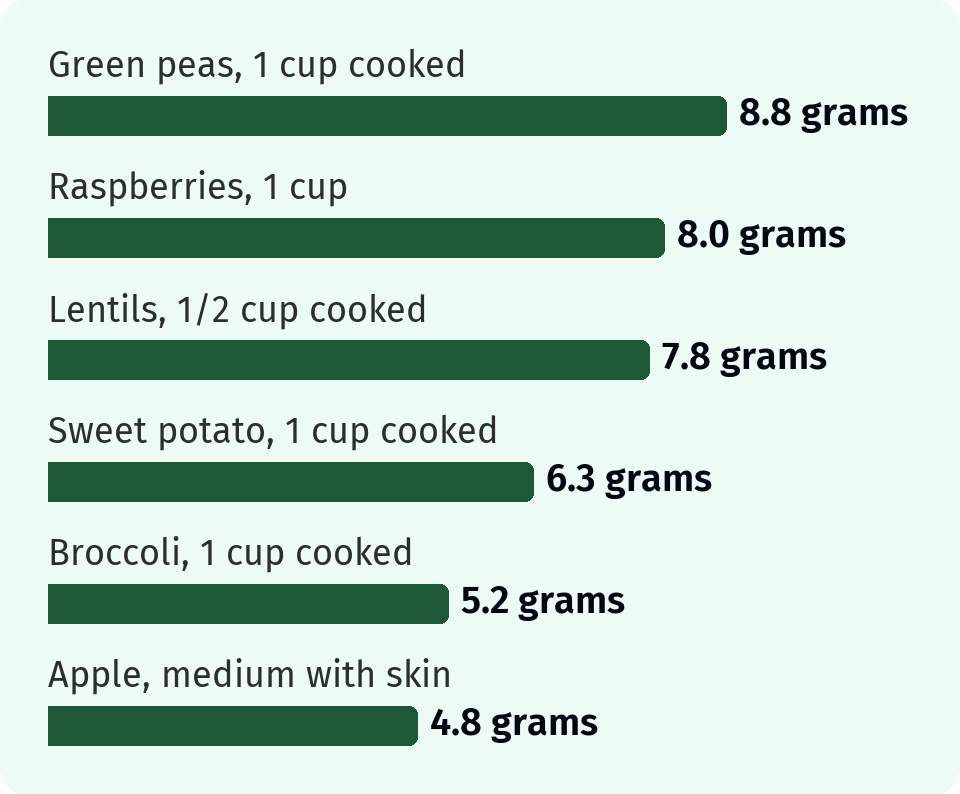
How much fiber is right for you? That is a question for your doctor or a dietitian, the NIDDK says, so they can plan meals with the right amount of fiber for you. The institute's own list of fiber-rich foods is a handy place to start. One cup of cooked green peas has 8.8 grams, 1 cup of raspberries has 8.0 grams, and 1/2 cup of cooked lentils has 7.8 grams. A medium apple with its skin has 4.8 grams, and 1 cup of cooked broccoli has 5.2 grams. Beans do well too: 1/2 cup of cooked pinto beans has 7.7 grams, and 1/2 cup of cooked chickpeas has 6.3 grams.
Two practical notes from the same page. Health care professionals may recommend adding fiber a little at a time, so your body gets used to the change. And the amount of fiber in a portion is printed on the Nutrition Facts label, so you can check a box of cereal or a can of beans without guessing.
For a sense of scale, the NIDDK points to the Dietary Guidelines for Americans, 2020-2025, which recommend a dietary fiber intake of 14 grams per 1,000 calories consumed. For a 2,000-calorie diet, the institute says, that works out to 28 grams of fiber per day. That is a general target, not a personal plan, which is why the institute sends you to your doctor or a dietitian to work out the right amount for you.
The NIDDK's table also reaches past fruit and beans. A 1/2 cup of ready-to-eat high-fiber unsweetened cereal tops the list at 14.0 grams, and 1/2 cup of cooked bulgur has 4.1 grams. One medium Asian pear has 6.5 grams, 1/4 cup of prunes has 3.1 grams, 1 cup of cooked sweet potato has 6.3 grams, and 1 cup of cooked collard greens has 4.8 grams. Whole wheat crackers and whole wheat tortillas come in at 2.9 grams and 2.8 grams per ounce, and 1/2 cup of cooked kidney beans has 5.7 grams.
This is general information for most people with diverticulosis or diverticular disease. It does not mean everyone can eat anything. If you have symptoms, or your doctor has given you specific food restrictions, ask before changing what you eat.