It can be both, depending on which one you buy and how much you eat. Harvard Health Publishing says dried fruit keeps most of its vitamins, minerals and fiber, but drying concentrates the natural sugar and calories into a smaller package, so the portion is what matters.
Dried fruit is simply fruit with most of its water removed, Harvard explains. The fiber stays, along with potassium, iron, magnesium and calcium. Raisins, dates and dried cranberries also keep their plant phenols. Drying does slightly reduce heat-sensitive vitamins such as vitamin C, but the majority of nutrients come through.
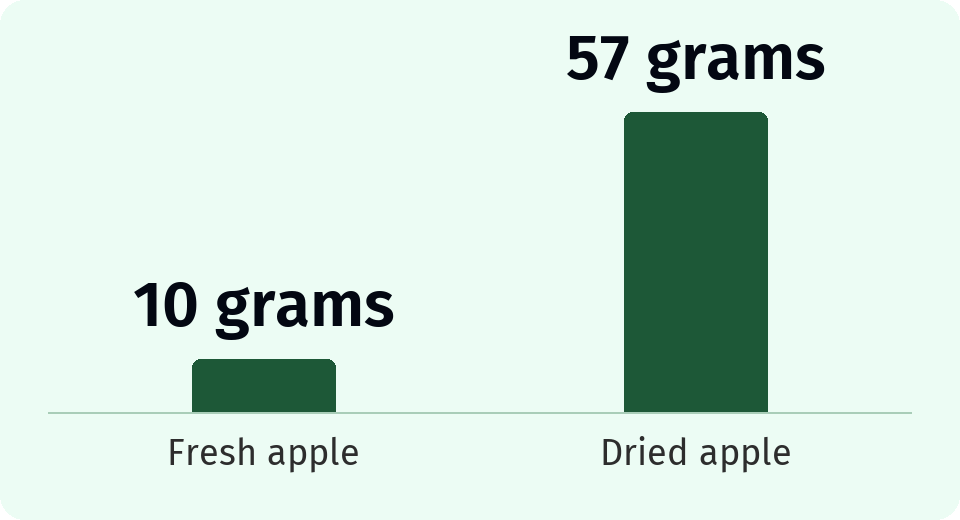
The extra sugar comes from concentration. Harvard's example: 100 grams of fresh apple contains 10 grams of sugar, while 100 grams of dried apple contains 57 grams. The real trap is volume. Dried pieces are small and snackable, so it is easy to eat two or three times what you would eat fresh. When was the last time you ate five fresh apricots in one sitting?
Added sugar is a separate check. Harvard says manufacturers sometimes add sugar to dried fruit to boost flavor, so read the ingredients list and the added sugars line on the Nutrition Facts label. A University of Massachusetts Amherst analysis of 1,497 fruit snacks found dried fruit had the highest nutrient density and fiber content and the lowest added sugar, while fruit-flavored gummies scored lowest.
Harvard's practical rule is to treat dried fruit as a garnish or a small treat: a sprinkling of dried cranberries on a spinach salad, or a few dried mango strips in a container for a snack. When in doubt, eat no more than half as much dried fruit as you would fresh. If you would eat one cup of fresh cherries, serve yourself 1/2 cup of dried cherries.
Freeze-dried fruit is a different product, Harvard notes. Instead of being heated, the fruit is frozen and then placed in a vacuum chamber to pull out the moisture. Because it is never heated, it tends to keep its nutrients better than heat-dried fruit and takes on a light, crunchy texture. It is still calorie-dense, Harvard cautions, so the same portion rule applies.
You can also make dried fruit at home, Harvard says, in an oven set on low, steady heat or in a dehydrator. People have used the sun to dry and preserve fruit for thousands of years. Even so, Harvard's overall advice is that most of the time fresh fruit is the better choice, since it is naturally lower in calories and sugar and no one has added sugar to it.
The UMass Amherst study, published in the journal Nutrients, sorted fruit snacks into nine categories and scored them with the Nutrient Rich Foods Index, which weighs desirable nutrients such as fiber, potassium and iron against added sugar, saturated fat and sodium. Only three types met the federal dietary guidelines' recommendations for high-nutrition snacks: dried fruit, fruit puree and canned fruit with juice. The researchers said canned fruit packed in something other than juice and dried flavored fruit also carry more added sugar. They noted that 80% of Americans do not eat the five daily fruit servings the guidelines recommend, so choosing a nutrient-dense fruit snack is one way to add fruit to the day.
If you follow an eating plan for diabetes or another condition, ask your doctor or dietitian how dried fruit fits.
