- Thriving Guide
- Posts
- Do Tanning Beds Become Safer With Sunscreen?
Do Tanning Beds Become Safer With Sunscreen?
Here’s why sunscreen won’t protect you from the dangers of indoor tanning and what to do instead.

Audrey Sawyer
January 19, 2026
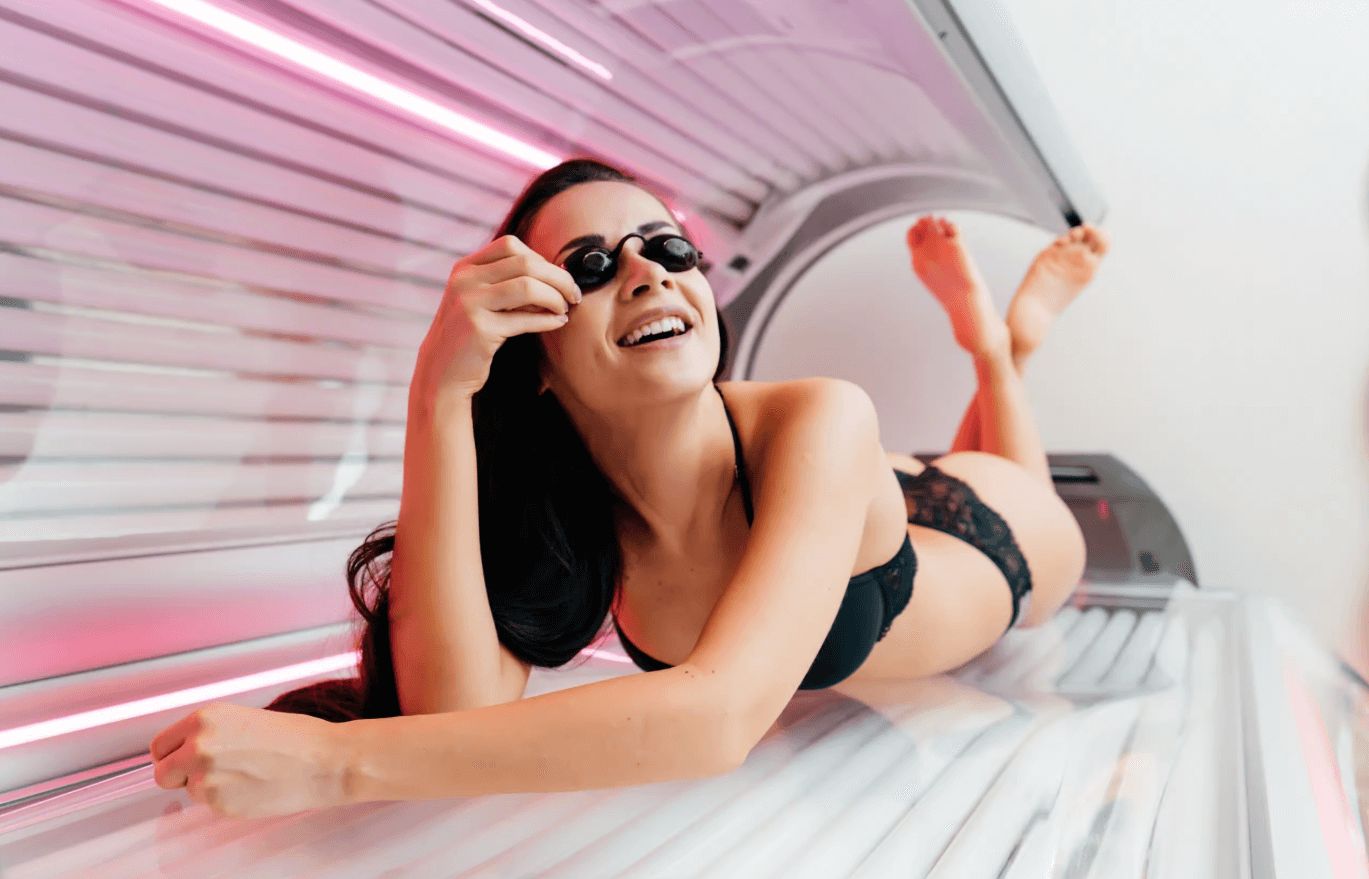
If you're hoping sunscreen will make indoor tanning safer, here's the hard truth: there is no evidence that using sunscreen in a tanning bed protects you from the harmful effects of ultraviolet (UV) radiation. In fact, major health organizations advise against the use of tanning beds altogether regardless of whether you wear sunscreen.
While broad-spectrum sunscreens do protect against both UVA and UVB rays, tanning beds emit UV radiation at intensities far beyond what sunscreen is designed to handle. And the risks go beyond sunburn they include skin cancer, premature aging, and permanent skin damage.
Why Tanning Beds Are So Dangerous
Tanning beds expose your skin to both UVA and UVB radiation. Both types are harmful:
UVA rays penetrate deep into the skin, accelerating premature aging and damaging skin cells in the dermis.
UVB rays affect the skin’s surface, causing sunburn and directly damaging DNA.
Although UVB rays are more closely associated with burning, both UVA and UVB radiation are known carcinogens. The World Health Organization has classified tanning beds as Group 1 cancer-causing agents, putting them in the same category as tobacco smoke and asbestos.
Studies show that using tanning beds before the age of 35 increases your risk of melanoma by 59%, and indoor tanning is linked to a 58% increase in squamous cell carcinoma and a 24% increase in basal cell carcinoma two of the most common types of skin cancer.
Can Sunscreen Help?
Broad-spectrum sunscreens are formulated to protect your skin from sun exposure but they are not designed to withstand the concentrated intensity of tanning beds, which can emit 10 to 15 times more UV radiation than midday sun.
Here’s why sunscreen isn’t effective in this setting:
SPF ratings are based on natural sun exposure, not artificial UV radiation from tanning beds.
Tanning beds vary widely in their design and UV output, making it impossible to predict or control exposure levels.
No studies support the use of sunscreen in tanning beds, and such research would be considered unethical due to the high risk of harm.
In short, applying sunscreen in a tanning bed may reduce some skin damage, but it does not eliminate the serious risks, including cancer and accelerated aging.
What About a "Base Tan"?
The idea that getting a “base tan” before a sunny vacation will protect your skin is a common and dangerous myth. A tan is not a sign of health; it’s a sign of DNA damage. Even a base tan offers only the equivalent of SPF 3 or less, which is virtually useless in preventing sunburn or long-term damage.
According to the American Academy of Dermatology, no tan is a safe tan whether from the sun or a tanning bed.
Signs of UV Damage from Tanning Beds
Beyond increasing your cancer risk, tanning beds can cause visible signs of premature aging often much earlier than from natural sun exposure. This is called photoaging and may include:
Wrinkles and fine lines
Age spots or uneven pigmentation
Sagging skin
Spider veins
Blotchy or rough skin texture
According to dermatologists, these signs may appear within a year of regular tanning bed use, especially in younger users.
Safe Alternatives to Tanning Beds
If you want a sun-kissed glow without risking your skin’s health, consider safer alternatives:
Self-tanning lotions or sprays provide color without UV exposure.
Spray tans from professionals offer an even application without long-term harm.
Bronzing makeup can give a temporary glow without damaging your skin.
And for actual sun exposure, follow sun-safe practices:
Apply broad-spectrum sunscreen with SPF 30 or higher before going outdoors.
Reapply every two hours, or after swimming or sweating.
Wear protective clothing, including wide-brimmed hats and UV-blocking sunglasses.
Seek shade, especially during peak sun hours (10 a.m. to 4 p.m.).
Avoid tanning beds altogether.
Bottom Line
Using sunscreen in a tanning bed does not make indoor tanning safe. The intense UV radiation in tanning beds far exceeds what sunscreen is formulated to block, and no SPF can fully protect your skin in this environment.
The best way to safeguard your skin is to skip tanning beds entirely and embrace healthier, safer options for achieving your glow. Your skin and your long-term health will thank you.
Share this article or subscribe to our newsletter for more science-backed wellness advice.